System Overview
The online user path is:
The React frontend issues
/chat/*requests.Local proxying or Nginx rewrites those routes to
/api/v1/*.The API gateway enforces authentication, rate limiting, and proxy behavior.
The RAG service orchestrates retrieval, graph support, generation, citations, and persistence.
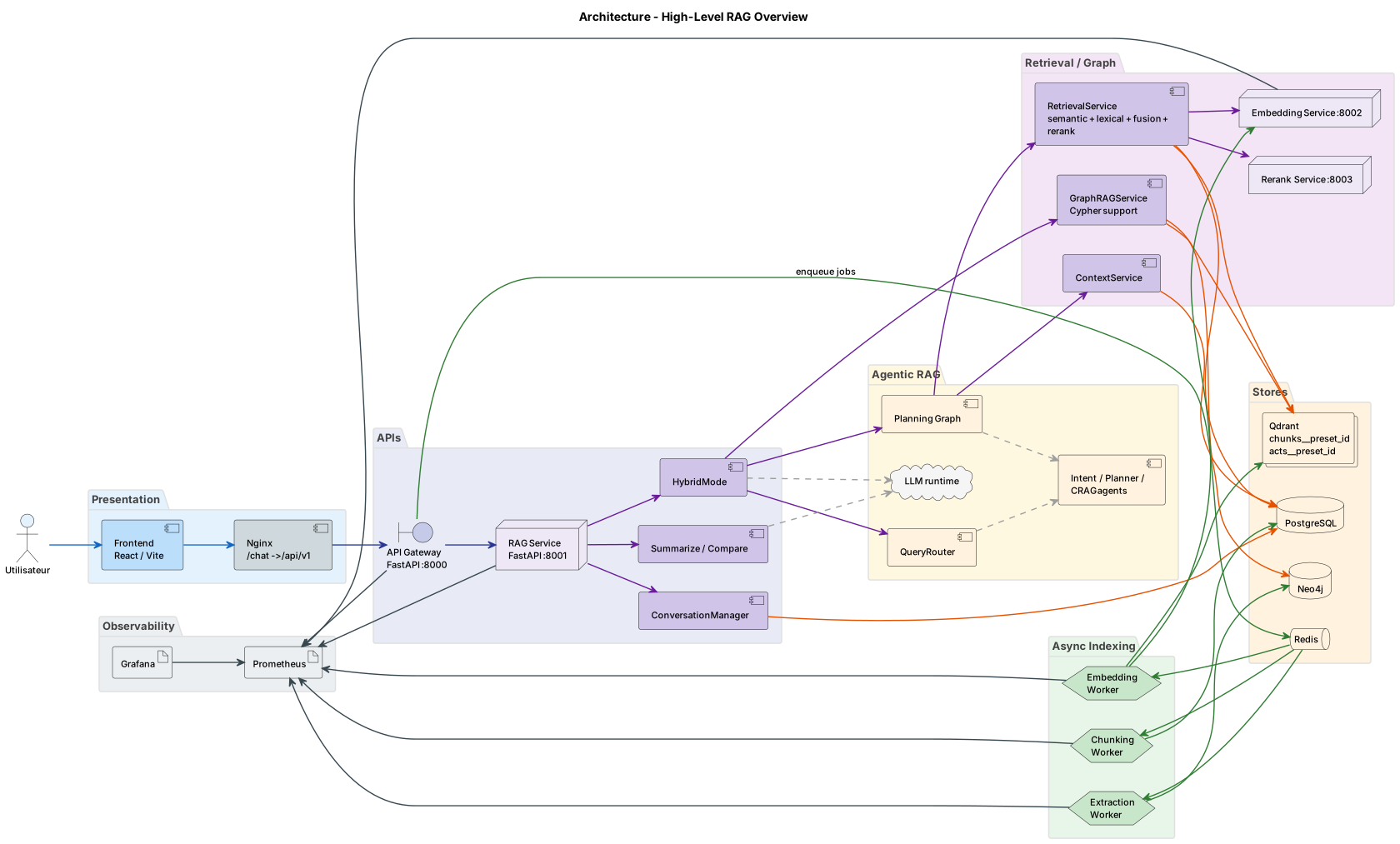
Simplified architecture diagram generated from docs/architecture_simple.puml.
Runtime building blocks
Layer |
Main responsibilities |
Representative code |
|---|---|---|
Frontend |
Request initiation, chat state, source and timing display |
|
API gateway |
Auth, proxying, rate limiting, edge metrics |
|
RAG runtime |
Query orchestration, retrieval, generation, SSE |
|
Data stores |
PostgreSQL, Qdrant, Neo4j, Redis |
|
Async pipeline |
Chunking, embedding, extraction workers |
|
Observability |
Prometheus, Grafana, exporters |
|
For the rationale behind this split, see Architecture Notes.
Notes
Purpose: give engineers a stable overview of the online and offline system boundaries.
Source of truth:
docs/architecture_simple.pumland the maintained SVG export.Audience: engineers onboarding to the current stack.
Notes: this diagram is intentionally simplified; the detailed version lives in the audit page.